


Introduction:
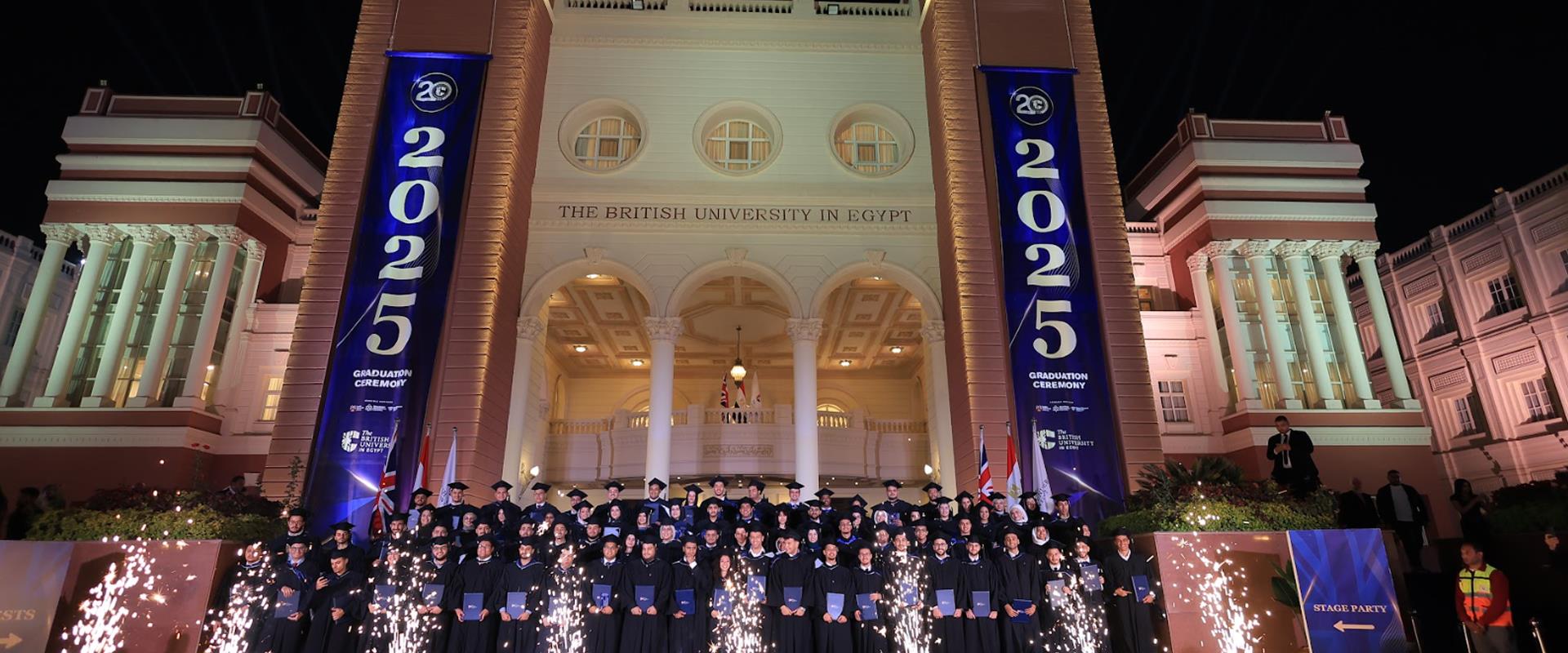
The Faculty of Informatics and Computer Science (ICS) at The British University in Egypt (BUE) has evolved from a small academic programme into a multidisciplinary computing faculty committed to developing graduates who are academically grounded, technically proficient, and prepared for the demands of the computing industry. A significant milestone in its history was the graduation of its first cohort in autumn 2009, comprising nine students: six specialising in Computer Science and three in Information Systems. Since then, the Faculty has expanded its academic provision, student community, and engagement with the evolving needs of the technology sector.
The Faculty's academic development reflects the continuous evolution of computing and the emergence of new technological disciplines. Its original Network specialisation was renamed Computer Networks and Cyber Security in 2024, reflecting the growing importance of cybersecurity alongside network technologies. In September 2012, the Faculty further expanded its academic provision with the launch of its Master of Science (MSc) programme. Today, ICS offers five specialisations: Computer Networks and Cyber Security, Artificial Intelligence, Information Systems, Computer Science, and Software Engineering. Together, these specialisations address key areas of contemporary computing, from intelligent systems and software development to information management, secure digital infrastructure, and the fundamental principles of computer science.
A defining feature of the Faculty is its commitment to preparing students for professional practice and employment in the technology sector. Alongside developing theoretical knowledge, ICS emphasises the practical application of computing concepts, the development of technical and analytical capabilities, and the cultivation of teamwork, communication, and problem-solving skills. Through its multidisciplinary curriculum and applied learning activities, the Faculty seeks to bridge the gap between academic study and professional practice, enabling students to address real-world challenges, adapt to technological change, and contribute effectively in their chosen fields. Industrial preparation and graduate employability therefore remain important considerations in the Faculty's educational approach.
The Faculty operates within Egypt's higher education regulatory framework. The Supreme Council of Universities (SCU) is the designated official authority responsible for the equivalence of academic degrees awarded by universities and institutions not governed by Universities Law No. 49 of 1972, comparing these qualifications with their counterparts awarded by universities subject to that law. The SCU also has a recognised role in the accreditation and governance framework applicable to BUE.
Today, the Faculty has more than 1,200 students and is supported by 30 full-time academic staff members and 40 teaching assistants. This growth from its first graduating cohort of nine students in 2009 reflects the development of a substantial academic community with a diverse range of computing specialisations and undergraduate and postgraduate provision. Building on this foundation, ICS continues to pursue its educational mission by connecting academic knowledge with practical skills, supporting innovation, and preparing graduates to contribute to technological advancement and the evolving needs of industry and society.
Vision:
The Faculty of Informatics and Computer Science seeks to be the centre of excellence for knowledge creation and dissemination and a model for cooperation across boundaries.
Mission:
The Faculty is committed to providing the highest-calibre education in Information and Communication Technology (ICT), fostering research, innovation and creativity, and strengthening its ties with the community, industry, universities and research centres at national and international levels.
History and Development:
The Faculty welcomed its first cohort of students in 2005, with its first graduating cohort completing their studies in autumn 2009. This first cohort comprised nine graduates: six specialising in Computer Science and three in Information Systems. Since then, the Faculty has continued to grow in student numbers, academic provision and research activity, and now serves more than 1,200 students.
The Faculty offers five undergraduate specialisations: Artificial Intelligence, Computer Networks and Cyber Security, Computer Science, Information Systems, and Software Engineering. These specialisations reflect the breadth of contemporary computing and provide students with opportunities to develop expertise in areas that are central to technological development and digital transformation.
In addition to its undergraduate provision, the Faculty launched its postgraduate programme in September 2012, extending its contribution to advanced study and research in computing and related disciplines.
The Faculty's academic community includes full-time academic staff and teaching assistants who support teaching, learning, research and student development. Through its academic programmes, practical activities and engagement with industry and the wider community, ICS seeks to provide students with a strong foundation for professional careers and further academic development.
Quality Assurance and Accreditation:
In 2017, the Faculty became the first private faculty in Egypt to obtain accreditation from the National Authority for Quality Assurance and Accreditation of Education (NAQAAE), reflecting its commitment to academic quality and continuous improvement.
Degree Awards and Recognition
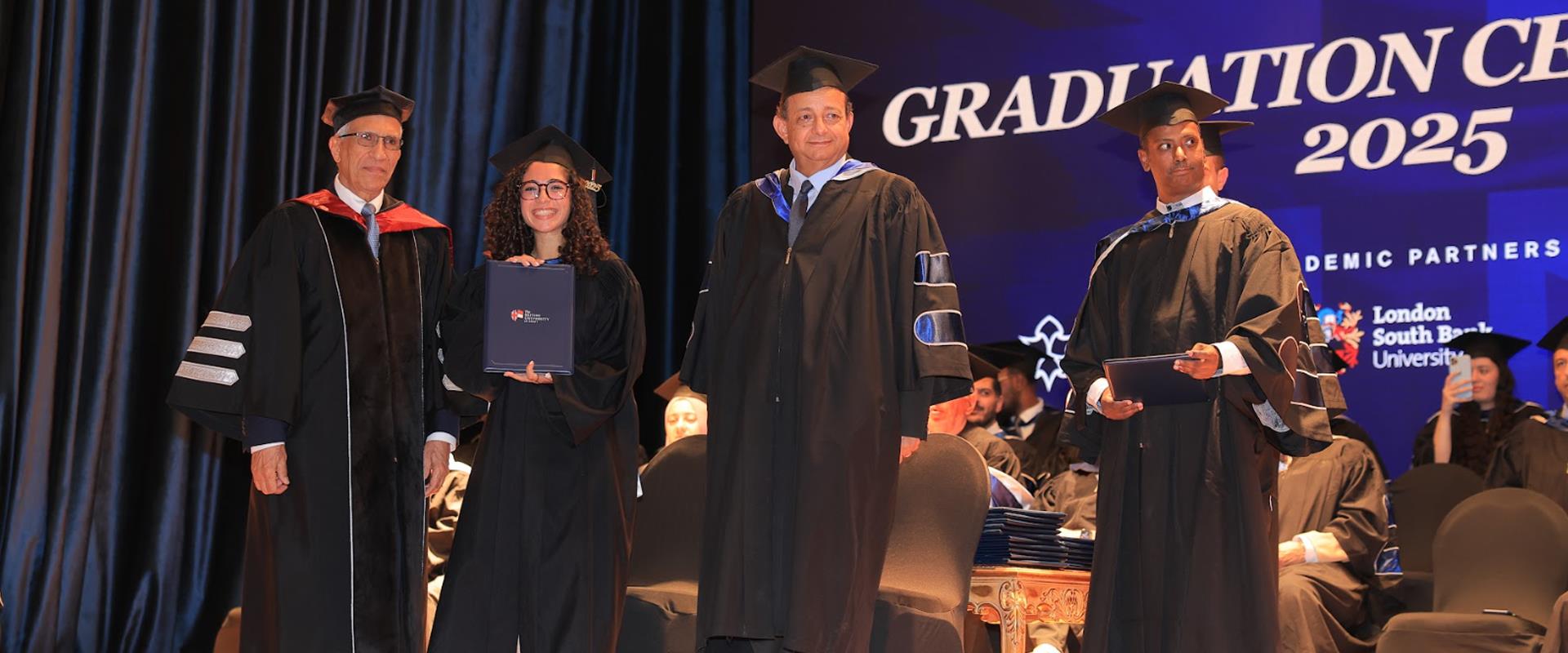
Graduates of both the undergraduate and postgraduate programmes receive two certificates: one awarded by the British University in Egypt (BUE) and another by London South Bank University (LSBU). Furthermore, the undergraduate degree is recognised by the Supreme Council of Universities (SCU) in Egypt.
.jpg)

The Supreme Council of Universities is the only designated official entity in Egypt for the recognition and equivalence of academic qualifications and degrees awarded by universities and institutes that are not subjected to Universities Law No. 49 dated 1972 or foreign Higher educational institutes.