
News & Events
Faculty of Communication and Mass Media Concludes its 7th International Conference
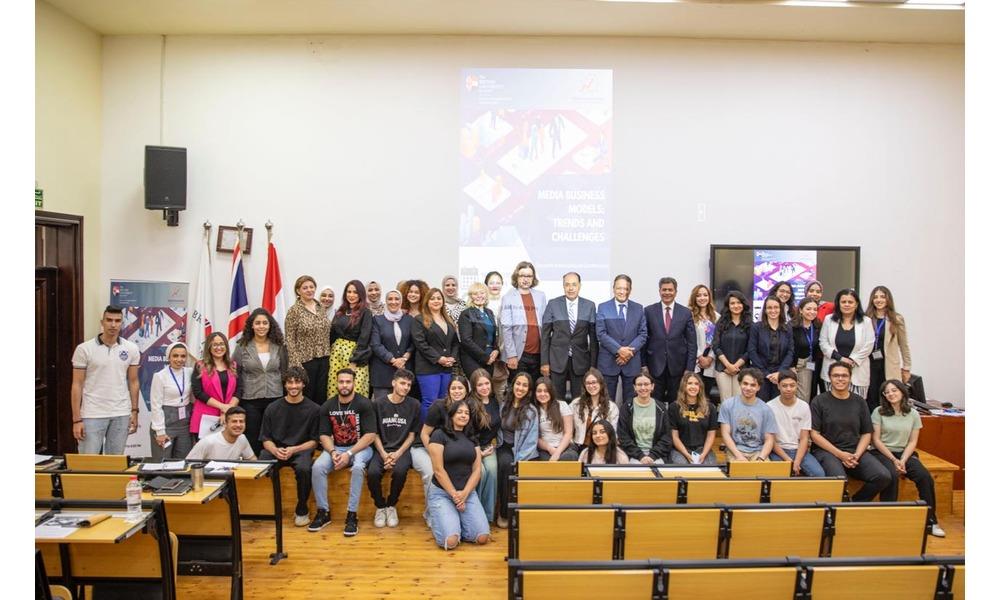
The British University in Egypt's Faculty of Communication and Mass Media Successfully Concludes the Seventh International Conference, themed "Media Business Models: Trends and Challenges," the Seventh International Conference concluded on April 16th and 17th, 2024. The conference brought together 25 distinguished researchers and industry experts from Egypt, the United Kingdom, Italy, and the United States.
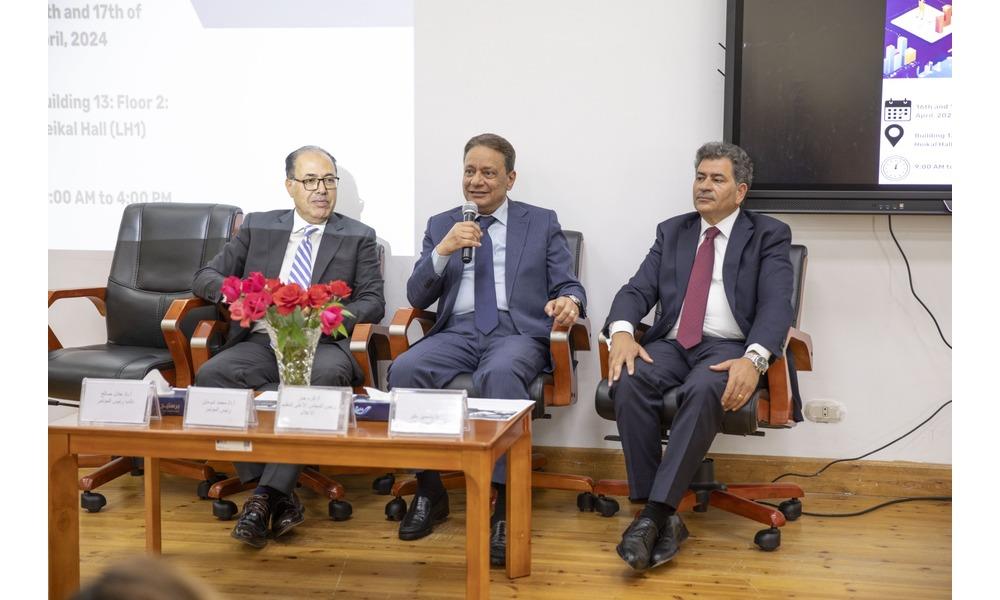
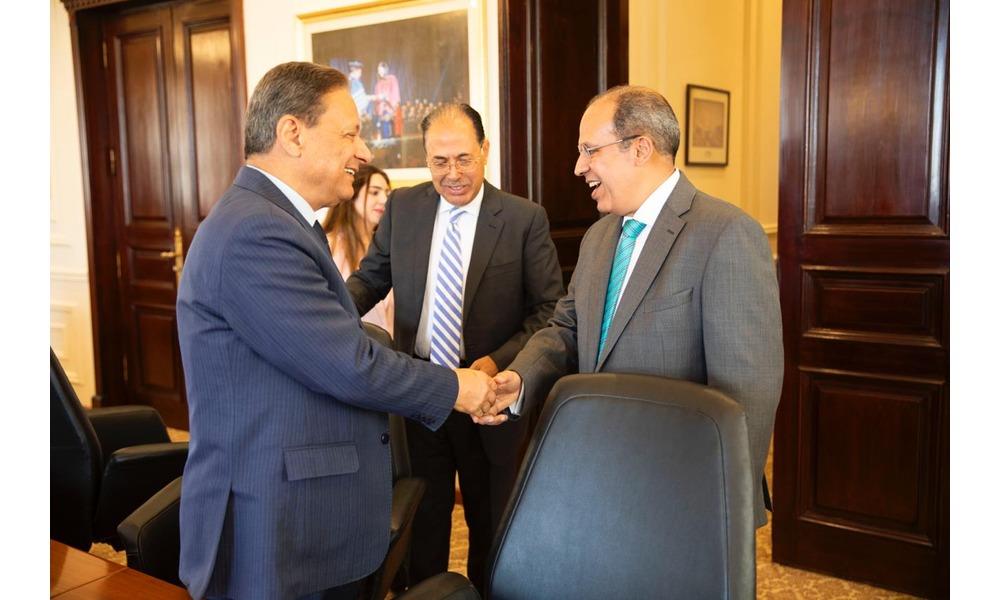
Renowned Egyptian journalist and media figure, Karam Gabr, Chairman of Egypt's Supreme Council for Media Regulation, inaugurated the conference. In his opening address, Gabr underscored the conference's importance amidst the ongoing digital revolution and the hurdles confronting both traditional and digital media industries.
Professor Mohamed Loutfi, President and Vice-Chancellor of The British University in Egypt, Professor Mohamed Shoman, Dean of the Faculty of Communication and Mass Media, and Professor Adel Saleh, Vice Dean of the Faculty, extended a warm welcome to Mr. Gabr, accentuating the conference's significance. They reiterated the University's commitment to Egypt's sustainable development goals, highlighting the pivotal role of students in the institution's educational and research pursuits and stressing the importance of exploring diverse media business models tailored to the Egyptian context and the exploration of employment avenues for media graduates centred around digital media models.
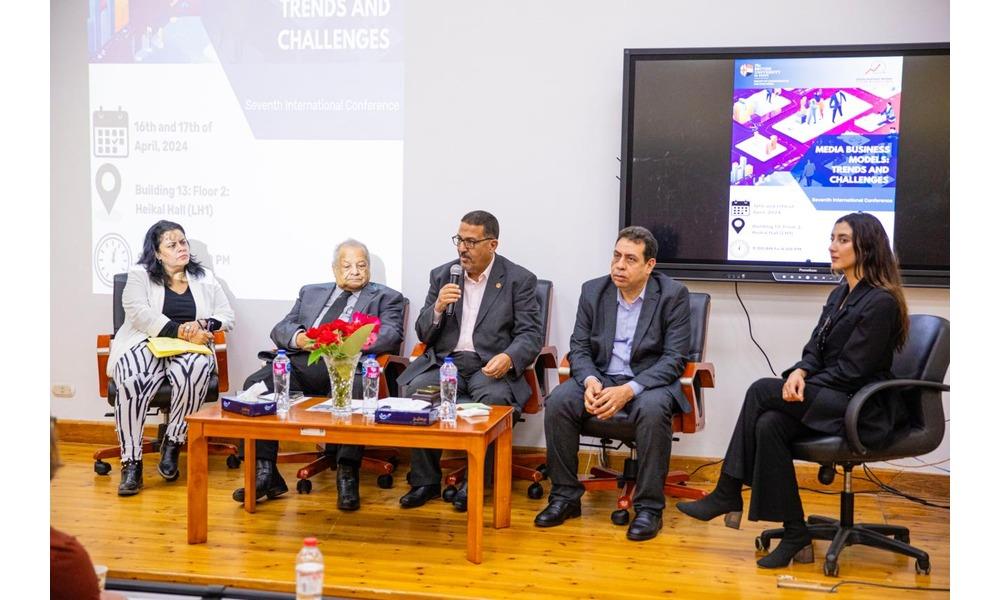
The conference featured discussions led by prominent figures in the Egyptian media landscape, including Ibrahim Abu Zekry, President of the Arab Producers Union, former Chairperson of Dar Al-Maaref, Journalist Saeed Abdel-Azeem, Chairperson of Alborsa and Daily News, Journalist Hussein Abd Rabo, and content producer Nour Hassan. Their insights enriched the conference, providing valuable perspectives on the evolving media business landscape in Egypt and beyond.
During the conference, 8 sessions were conducted to discuss 25 papers by researchers from Egypt and six other countries namely, Algeria, South Africa, Italy, United Kingdom, United States of America, and Germany. The esteemed researchers presented 25 papers, in addition to engaging workshops and discussion about the transformation in business models of media.
Key recommendations stemming from the conference underscored the imperative of integrating media business models in the digital era. These recommendations emphasised the incorporation, integration, and collaboration between business and media sectors, alongside the constant evolution of content and business models in response to dynamic digital environments.
1. The faculties of Communication and Mass Media in Egypt should focus on studying the successful business models worldwide to facilitate integrating them in Egypt. This would help the media industry in Egypt to respond to digital challenges and to develop in alignment with the Sustainable Development Goals of Egypt.
2. The new media projects must consider the incorporation of a convergent media environment among media outlets and various types of content. This incorporation does not only focus on technology, but it also includes the introduction and implementation of creative methods and content that meet the needs of the digital audience. Brevity, focus and novelty should be the core elements of this incorporation.
3. There must be a focus on media values and media-shared models, and this should involve the interaction and collaboration between media content producers and the audience who become content creators nowadays. This can be done through the collaboration of the public and private sectors along with civil society to ensure sustainability in media production.
4. Media producers should take into consideration the constant and rapid transformation and dynamic environment of digital media applications. They also should consider what the business models in media impose on the new media application.
5. Creative solutions should be found to help Egyptian and Arab media cope with the digital transformation and help in future planning that should optimise Egyptian media resources and capabilities. In addition, these solutions must prioritize the importance of keeping the national and cultural identity without detachment from the world. It is essential to positively and effectively interact with different cultures while preserving and optimizing the national and cultural identity through promoting to production of content that respects the Egyptian culture and religion. This content should also be relatable to new generations and should be influential enough to make an impact on their mindsets.
6. Securing new job opportunities for media graduates depends on digital media literacy, which requires developing new programs in the faculties of Mass Communication in Egypt to align with the market needs.